How Long Before Labor Does Nausea Start? What to Expect

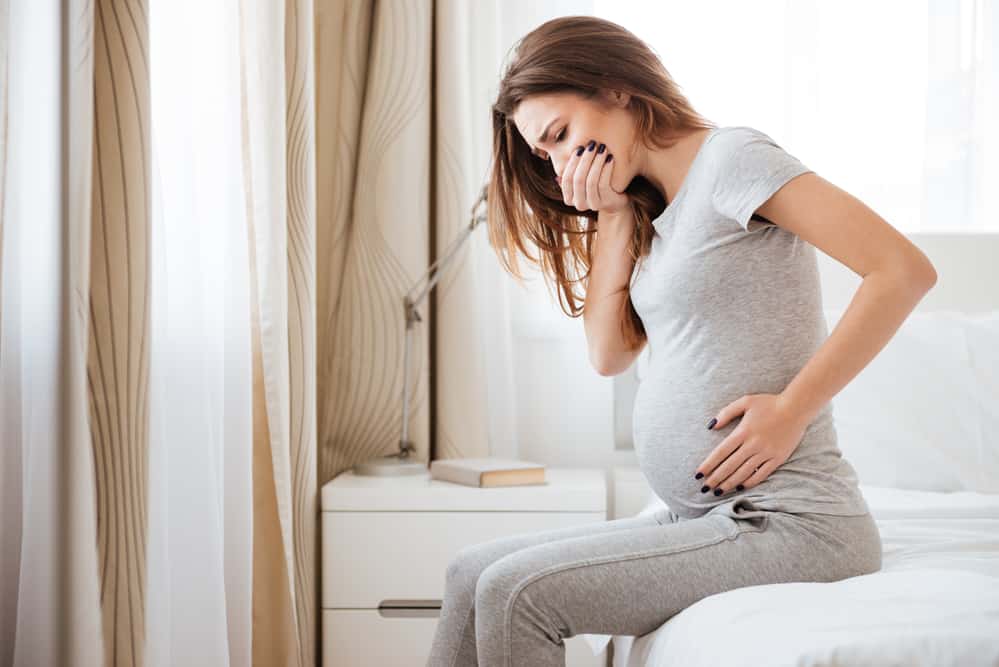
You are 38 or 39 weeks along, your stomach turns over at breakfast, and you think: is this it? We know that moment, mama. Nausea shows up on almost every list of early labor signs out there, so it's tempting to read it as a countdown.
Here is the honest answer: nausea can mean labor is 24 to 48 hours away, especially when it lands alongside diarrhea or a lost mucus plug. But plenty of other things cause late-pregnancy queasiness, and some of them will keep you feeling rough for weeks. Here is how to tell the difference.
Is nausea an early sign of labor?
Yes, it can be. Nausea in your third trimester is considered a possible early labor sign, particularly when it shows up with diarrhea or the loss of your mucus plug. In that case, you could be just 24 to 48 hours from delivery (ACOG).
That said, labor is not the only reason you might feel sick in your last weeks. Before you pack the bag and call everyone, it's worth knowing the other usual suspects.
Labor itself
When your body is getting ready to deliver, digestion slows down so your system can focus on birth. A full stomach at that point can trigger nausea or vomiting, and loose stools often join the party. Prostaglandins, the same hormones that soften your cervix, also stimulate your bowels (Mayo Clinic). Glamorous, we know.
Hormones
Your progesterone levels peak around 32 weeks. That's a good thing, because progesterone helps prevent preterm labor. The side effect: it relaxes the smooth muscle in your gut, slows digestion, and can leave you queasy well before anything labor-related starts (NIH).
Anxiety
Worry about labor, the hospital, a c-section, the first night home: any of it can make your stomach churn. Try slow breathing, a short walk, or a conversation with your provider about what's coming. Naming the fear often settles the belly.
Prenatal vitamins
If you've recently switched brands or started a new formula, your vitamin may be the culprit. Iron-heavy prenatals are famous for this. Ask your provider about taking them with food, splitting the dose, switching the timing to bedtime, or moving to a gummy format.
Lack of space
As your baby grows, your uterus presses hard on your stomach and intestines. In one classic study, this pressure caused heartburn in 60%, nausea in 16%, and vomiting in 7% of women in the third trimester. That kind of nausea can hang around for weeks and is not, sadly, a labor countdown.
A stomach bug
Terrible timing, but it happens. If someone in your household has been sick or you're running a fever, you may just have a virus. Most pass on their own. The important piece: if you cannot keep fluids down, call your provider. Dehydration can trigger contractions and complicate your birth (ACOG).
Preeclampsia
Preeclampsia is a serious high blood pressure condition that affects around 1 in every 25 pregnancies in the United States (CDC). Warning signs include nausea or vomiting after mid-pregnancy, a bad headache that won't quit, vision changes, upper right belly pain, and sudden swelling in your face and hands.
This one needs a same-day call. If you have any of those symptoms, page your provider or go in to be checked. A quick blood pressure read and urine test is all it takes to rule it out.
HELLP syndrome
Hemolysis, elevated liver enzymes, and low platelets: HELLP syndrome is a rare but serious complication that affects less than 1% of pregnancies and usually shows up between 32 and 34 weeks. Symptoms look like preeclampsia plus upper right chest or belly pain. This is urgent care, not wait-and-see.
Acute fatty liver of pregnancy
Very rarely (roughly 1 in 20,000 pregnancies), late-pregnancy nausea points to acute fatty liver of pregnancy, or AFLP. Signs include persistent vomiting, upper belly pain, and jaundice (yellowing of skin or eyes). AFLP is a medical emergency; go to the hospital.
The rule we tell every mama we talk to: listen to your body. If something feels wrong, ask for a blood pressure check and a urine test. Both are quick, both are free of stigma, and your provider would genuinely rather see you than miss something. It's one of those "better to ask" situations.
How long does nausea last before labor?
If your nausea is truly labor-related, it often resolves once your stomach empties, sometimes within a few hours. That said, many women stay nauseous through active labor and vomit during contractions or pushing (Mayo Clinic).
If hormones or crowded anatomy are driving it, nausea can hang on for weeks. That's frustrating when you're already over it, but it doesn't mean anything is wrong.
Sickness caused by preeclampsia, HELLP, or AFLP will not settle on its own. Those need medical treatment before the nausea will ease.
If you're also noticing loose stools, our guide on how soon after having loose bowels did you go into labor walks through the GI side of pre-labor in more detail.
What should you do if you feel nauseous in late pregnancy?
The short version: treat it like a flare-up of morning sickness, and call your provider if anything in the red-flag list shows up.
Things that genuinely help:
- Eat small amounts often, rather than three full meals.
- Sip water or electrolyte drinks throughout the day.
- Try ginger tea, ginger chews, or plain ginger cookies.
- Use peppermint oil aromatherapy, which has small-scale research supporting it for pregnancy nausea (Journal of Obstetric, Gynecologic & Neonatal Nursing).
- Skip acidic, fatty, or spicy foods that trigger heartburn.
- Adjust your prenatal: shift the timing, split the dose, try a gummy, or ask your provider about a different brand.
- Rest when you can. Fatigue makes nausea worse.
If you've tried everything and you're still struggling, your provider can prescribe an antiemetic that is safe in pregnancy. You don't have to white-knuckle it.
A warm (not hot) bath can also ease the last-weeks muscle aches and stress. Our guide on does a warm bath help induce labor covers what's safe and what the research says.
How do you treat vomiting in the third trimester?
If nausea turns into vomiting and you can't keep fluids down, call your provider the same day. Dehydration in late pregnancy can lower amniotic fluid and, in some cases, trigger preterm contractions (ACOG).
Signs you need to be seen:
- No urine for 8 hours, or very dark urine.
- Lightheadedness, a racing heart, or dry mouth.
- Vomiting everything, including sips of water, for more than a few hours.
- Any fever over 100.4°F.
- A headache, vision changes, or upper belly pain alongside the vomiting.
Your provider can give you IV fluids and an antiemetic to break the cycle. Most mamas feel significantly better within a few hours of a bag of fluids. Don't tough it out at home.
How do you handle nausea and vomiting during labor?
Vomiting during active labor is extremely common, and usually not an emergency. It can be triggered by strong contractions, a hormone surge, or a side effect of epidural or opioid pain relief (Mayo Clinic).
It can leave you drowsy or dizzy, which isn't ideal. So the focus during labor is staying hydrated and keeping some energy in the tank.
What tends to help:
- Small sips of water or clear electrolyte drinks between contractions.
- Ice chips or ice lollies, which are easier to keep down.
- Soft foods like yogurt, toast, or muesli bars if your provider allows eating.
- Diluted apple or pear juice, which is gentler than citrus.
Your nurse or midwife can also give you an antiemetic through your IV, so ask if it gets bad. You don't have to grit through it.
Loose Bowels Before Labor: What the Research Says
Nausea isn't the only GI symptom your body can throw at you in the final stretch. Loose bowels or diarrhea are a separate but closely related sign, and the cause is the same: prostaglandins. These hormone-like compounds soften your cervix and kick off contractions. They also stimulate your intestines, which is why the stomach upset and the contractions often show up as a pair.
That said, loose bowels before labor are not as common as the birth stories make them sound. One published study found that only about 4% of women experience gastrointestinal symptoms in the run-up to delivery. So if you've had a calm gut all pregnancy, that's completely normal. It doesn't mean you're behind schedule.
When loose bowels do show up before labor, the timeline is usually tight: most women who experience them go into active labor within 24 to 48 hours. Paired with nausea, a lost mucus plug, or a bloody show, that GI flare is a fairly strong signal that things are moving. On its own, it's worth watching but not a reason to race to the hospital.
A few things to keep in mind if loose stools hit:
- Sip water and electrolyte drinks steadily. Dehydration can trigger contractions on its own, and you want to go into labor with a full tank.
- Skip loperamide (Imodium) or any anti-diarrheal without checking with your provider first. Several are not recommended in late pregnancy.
- Call your provider if diarrhea lasts more than 48 hours, if you also have a fever or chills, or if you feel dizzy or can't keep fluids down. Those signs point to infection or dehydration that needs a same-day check.
For a deeper look at the GI side of pre-labor, including what to eat and what to avoid, see our full guide to 20 signs of early labor.
FAQ
Can labor cause nausea?
Yes. Many women feel nauseous or vomit during labor. It can come from your body emptying your stomach, the intensity of contractions, or a hormone spike. Epidurals and IV opioids can also trigger it. If it gets severe, your provider can add an antiemetic through your IV.
Can labor start with nausea?
Sometimes. Nausea can be an early labor sign, especially paired with diarrhea or mucus plug loss. But it's just as often caused by hormones, anxiety, or your baby pressing on your stomach. More reliable signs that labor is truly starting are regular contractions, a bloody show, or your water breaking (ACOG).
When should I call my provider about late-pregnancy nausea?
Call same day if you can't keep fluids down for more than a few hours, if you have a bad headache or vision changes, if you notice upper belly pain, or if you have sudden swelling in your face and hands. Those can be signs of preeclampsia or HELLP and need a same-day check.
Does nausea mean I'm going into labor tonight?
Not reliably. Nausea alone is a weak predictor. Pay attention to what comes with it: regular contractions, loose stools, or a mucus plug point more strongly toward labor. Nausea on its own is usually just the third trimester being the third trimester.
This article is for informational purposes only and is not a substitute for professional medical advice. Always consult your healthcare provider, obstetrician, or midwife for guidance specific to your pregnancy.