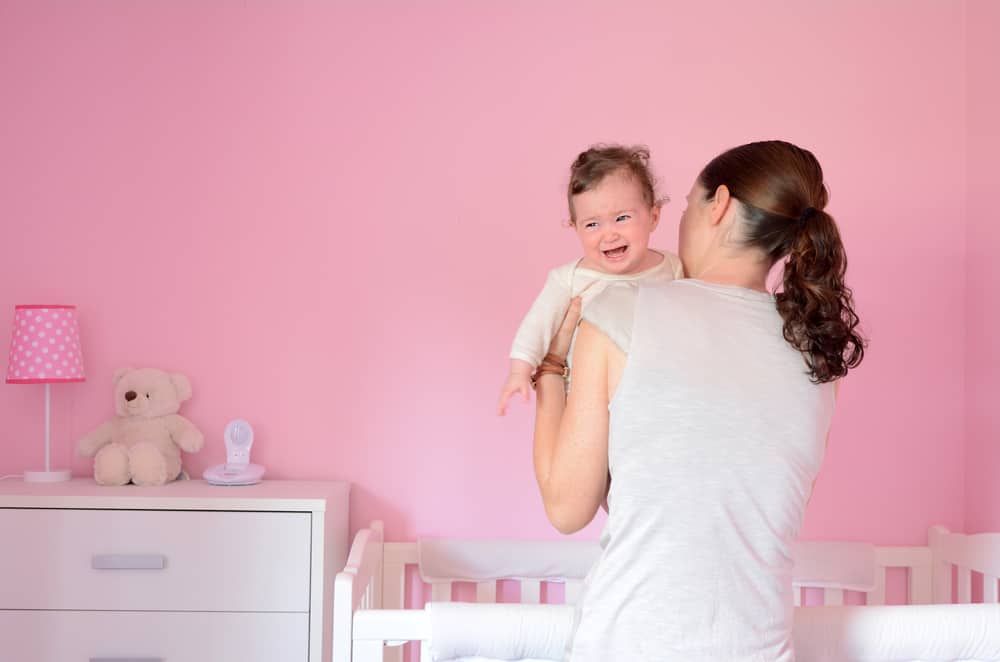
A Mom's Fear: Why doesn't my Baby love me?

If the thought "my baby doesn't love me" has crossed your mind, breathe. You are not a bad mom. Many of us have felt exactly that, often at 3 a.m. in a quiet house, holding a baby who won't settle while tears slide down our own cheeks. It almost never means what you fear it means.
If your baby doesn’t seem to miss you, pulls away when you reach for them, or lights up more for your partner, it can gut you. We know. But in the vast majority of cases, this isn't rejection. It's normal infant behavior filtered through an exhausted, anxious mama brain.
The rarer, more serious explanation, Reactive Attachment Disorder, only develops when a baby is genuinely neglected. If you are worried enough to read this article, that almost certainly isn't you. Let's walk through what's more likely happening, and when to ask for help.
Can Babies reject their Mothers?
It’s not typical for a baby to reject its mother unless the mother neglects to care for the baby. In this situation, your baby could develop a condition known as Reactive Attachment Disorder (RAD), per the Mayo Clinic. Far more often, though, a tired, tender mama is misreading normal newborn behavior as rejection.
It’s important to remember your baby isn’t capable of forming an opinion of you as an older child or adult would. If you feel like your baby is rejecting you, it’s not because they don’t like you. But, it could be because they don’t know you.
What is Reactive Attachment Disorder?
Reactive Attachment Disorder develops when a baby misses out on early bonding with their primary caregivers, per the Mayo Clinic. These caregivers are usually the baby’s parents, and symptoms typically show up in children under five.
Babies bond in the earliest months through the ordinary rhythm of care: soothing, holding, talking, feeding, eye contact. The American Academy of Pediatrics points out that this consistent back-and-forth is what builds secure attachment (HealthyChildren.org, AAP). If you are doing that, mama, you are building the bond.
However, in situations where this care is not present and there is negligence, this bond cannot form. Therefore, the baby cannot develop as it would with essential care and attention.
Older children, teens, and adults can all show various signs of Reactive Attachment Disorder, with symptoms changing as the person ages. If you catch attachment disorders early on, you can often correct them. However, if left unchecked, babies with attachment disorders will continue to have problems as they grow.
People with attachment disorders struggle to develop emotional connections or handle new situations. They can also typically exhibit behavior issues and communication struggles.
In some cases, children with RAD can go in the opposite direction. Instead of not wanting to connect, they excessively seek attention. It is their way of making up for the attention they missed out on as an infant.
Four Reasons you think your Baby doesn’t love you
- Your baby doesn’t miss you.
- Your baby doesn’t want you to hold them.
- You feel like your baby doesn’t know you.
- Your baby seems to prefer others.
What if you were there every second of your baby’s life? From day one, you held your baby, played and sang to your infant, and met their every need. Yet, you still get an overwhelming sense that your baby doesn’t love you.
You’re not alone. Many moms feel this doubt, and it’s often because of the following reasons.
1. My Baby doesn’t miss me
You feel like your baby doesn’t miss you when you are away. You return home eager to see your baby when you leave, whether a quick jaunt to the store or a full work day. However, your baby doesn’t seem as happy to see you as you are.
2. My Baby doesn’t want me to hold them
Another reason you might feel like your baby doesn’t like you is that they resist you holding them. When your baby doesn’t want you to hold them, it can make you feel like they don’t love you.
3. My Baby acts like they don’t know me
Do you sometimes feel your baby doesn’t know who you are? Perhaps they cry when you enter the room. Or they don’t seem to show any acknowledgment or excitement when they see you. It’s easy for a mom to think their baby doesn’t love them when their infant doesn’t even appear to recognize them.
4. My Baby seems to like Others more than me
If your baby gets super excited when they see your partner, grandparent, or sibling, it’s natural for you to hope for the same response. However, if your baby is less interested in you than the other people in their life, it can cause feelings of doubt. You can start to think; maybe my baby doesn’t love me.
What can you do if you think your Baby doesn’t like you?
Your first step is to speak with your doctor and your pediatrician. If medical professionals suspect something like RAD might be at play, they will likely refer you to a psychologist. Treatment for RAD often focuses on the primary caregiver or caregivers. You might also need to attend parenting classes.
However, what if it’s not something as serious as RAD? You’ve been with your baby from day one, ensuring they get all the love and attention possible. So, why do they seem like they don’t like you?
You might be misreading your Baby’s Behavior
You’re likely misinterpreting your baby’s actions and responses. This is especially the case for moms since, typically, moms are home with their newborns the most.
When your partner or someone new comes home, your baby is excited to see someone new. Maybe they’re crying more with you because they know you can fix whatever is bothering them. They’re saying, “Hey, mom! You know what to do! Come help me!”
Also, because you’re spending lots of time with your new bundle of joy, you’re likely exhausted and maybe a little grumpy. These emotions can trigger certain feelings in your baby. They can also make you assume the worst if your baby negatively responds to you.
Ask for help if you think your Baby doesn’t love you
Try not to take it to heart if you feel like your baby doesn’t love you, mama. Postpartum days can feel so isolating, like you are the only one in the world having this thought. You are not. Talk about what you are feeling with your healthcare provider. They can help you with coping strategies and, if needed, a referral. You are not a burden for bringing this up; you are doing the exact right thing.
It’s also important to be open with your doctors in case something deeper is at play, like postpartum depression. According to the Mayo Clinic, postpartum depression can blunt the bond you feel toward your baby, and the CDC reports roughly 1 in 8 postpartum mothers experience symptoms. It is common, treatable, and absolutely not your fault.
If you need support right now, Postpartum Support International offers a free helpline at 1-800-944-4773 (call or text), and 988 is the national mental health crisis line. Please never carry this alone. Reach out to someone who can help you work through it.
For gentler context on everyday worries, see our pieces on a newborn and long crying spells and why your baby may not eat at daycare.
This article is for informational purposes only and does not replace medical advice from your physician, pediatrician, or mental health provider. If you have concerns about your baby's development or your own mental health, please consult a qualified professional.