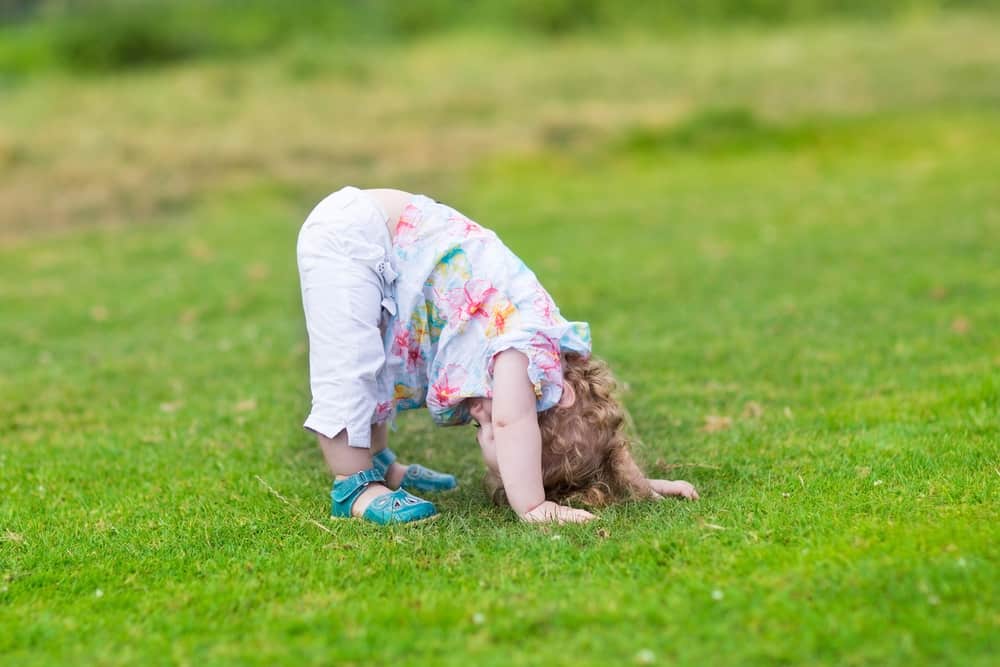
What Does It Mean When Babies Stand on Their Head?

Somewhere between 14 and 16 months, a lot of us catch our babies doing the cutest, weirdest thing. They plant the top of their head on the rug, park their little bottom in the air, and stare up at us like this is completely normal. We know the feeling, mama. You reach for your phone and your worry brain in the same second.
The short version? A toddler headstand is almost always a good sign. It means their balance system is developing, their core is getting stronger, and their curiosity has outgrown the right-side-up view of the world. The American Academy of Pediatrics notes that 12-to-18-month-olds are in a rapid gross-motor phase and regularly try out new positions as they go (HealthyChildren.org / AAP).
This guide walks through why your baby is doing it, when it's not a concern, and the small cluster of signs that are worth a quick call to your pediatrician.
In this guide, we cover:
- Why babies stand on their heads between 14 and 16 months
- What's happening in their brain and vestibular system
- Whether the pose is safe (and how to keep it that way)
- When it could signal a medical issue worth checking
- Simple ways to support balance and movement at home
Why does your baby stand on their head and look between their legs?
Because their body is ready for it, and their curiosity is louder than their sense of dignity. Between 12 and 18 months, toddlers are rapidly building the gross-motor skills that will carry them through running, climbing, and jumping (CDC Milestones). A downward-dog pose is just one of the ways they practice.
Several normal things can all be happening at once:
They're exploring a new perspective
Your baby's world looks completely different upside down, and that's fascinating to a 14-month-old brain. After they discover the trick, it's no wonder they keep peeking through their chubby thighs to check the view.
Dizzy feels funny
Hanging upside down creates that wobbly, weightless feeling that some kids adore. If your tot laughs when you spin or bounce them, they'll probably love this pose too. It's a small self-designed amusement ride.
They're hitting a gross-motor milestone
Bending over to plant their head takes core strength, balance, and control. The AAP describes 12-to-18 months as a stretch when toddlers are constantly testing new positions as walking, squatting, and climbing come online (HealthyChildren.org / AAP).
Like rolling over and pulling to stand, this trick is usually temporary. Grab a photo, mama. They'll swap it for a new move soon.
They love the reaction
If their first headstand got a laugh, a gasp, or your phone camera, they'll do it again. Toddlers are tiny performers. They're as impressed by your reaction as you are by theirs, which is why silly faces and surprised laughter tend to fuel the whole routine.
They're working on their core
Bending into a fold uses abdominal, back, and shoulder muscles all at once. Pediatric physical therapists describe these early "gym poses" as useful practice for posture, trunk control, and later skills like jumping (Nationwide Children's Hospital).
A daily minute or two upside down won't build a six-pack, but it is quietly strengthening the muscles behind balance, walking uphill, and eventually running after a sibling.
They're stimulating their vestibular system
The vestibular system lives in your inner ear and is in charge of balance, spatial awareness, and coordinating what the eyes see with what the body feels. Toddlers are wired to seek this input through spinning, rocking, bouncing, and yes, hanging upside down (Nationwide Children's Hospital).
Some research also suggests that rich vestibular play in early childhood is linked with coordination and postural development (NIH / PMC review). The takeaway is simple: when your baby parks themselves upside down, their brain is working.
They're enjoying the stretch
There's a reason adults love yoga. A gentle forward fold lengthens the spine and opens the hips, and babies seem to figure that out without a single YouTube class.
It chills them out
Some babies bend over when they're overtired, overstimulated, or upset. The position seems to help them reset. It wasn't that long ago they were upside down in the womb, so the pose can feel weirdly familiar.
Add in the calming effect of deep pressure on the top of the head and a bit of sensory input, and you've got a very portable toddler stress reliever.
They're copying someone
Toddlers learn by imitation. If they've seen an older sibling, a cousin, or a kid at the park do a headstand, expect a home recreation. It's how their little bodies figure out what they can do.
There's an old wives' tale (and a shorter explanation)
You may have heard that a baby standing on their head means mom is pregnant again. Thousands of moms will swear by it, and babies are genuinely good at picking up on parental emotions. But there's also a tidier explanation: this milestone hits around the same age many families start thinking about a second baby. Correlation, not magic.
If you're actually wondering whether you're pregnant, check our guide on the earliest signs of early pregnancy instead of asking the toddler.
Could it be a medical issue?
Usually not. A happy baby doing the occasional headstand is not a red flag for any specific condition.
The rare reasons to follow up with your pediatrician include:
- Your baby cries or looks uncomfortable during the pose.
- You feel bumps or see a clear curve when you run a finger down their spine.
- The pose is paired with missed milestones or lost skills (CDC Milestones).
- You notice new, repetitive, jerky movements or head-banging patterns.
For more on head-related quirks worth watching, our guide on when baby head-shaking side to side is worth a call walks through the difference between normal and not.
Is it safe for a baby to stand on their head?
For short stretches, yes. Healthy toddlers self-regulate: they come up when they feel dizzy or bored. Most headstand sessions last a few seconds to a minute, which isn't long enough to cause problems.
That said, the pose can leave them wobbly when they pop back up. Falls and bumps are common, so a soft surface and a nearby grown-up matter. The CDC's general home-safety guidance for this age emphasizes cushioned play areas and constant supervision while toddlers are mastering new moves (CDC, Child Safety).
One helpful mental check: is your baby happy during the pose? If they're laughing, exploring, and coming back for more, the pose itself is fine.
What should you do when your baby keeps standing on their head?
You don't need to stop the pose. You just want to soft-land it. The AAP recommends giving toddlers protected spaces to practice new gross-motor skills so they can keep exploring without big falls (HealthyChildren.org / AAP).
A few easy moves to keep the floor yogi safe:
- Clear hard toys, corners, and coffee-table edges from the play zone.
- Add a foam mat, rug, or folded blanket to cushion the head and hands.
- Stay within arm's reach, especially when they first pop back up and feel dizzy.
- Keep the pose off raised surfaces like sofas, beds, and changing tables.
- Offer a gentle redirect if they look overtired; spinning tots can tip toward a tantrum fast.
If you want to channel the energy, swap the headstand for another vestibular activity. Both deliver similar input without the height risk.
How can you support your baby's balance and movement at home?
With ordinary, low-cost play. The AAP and pediatric OTs agree that varied physical play through the toddler years supports balance, coordination, and confidence (HealthyChildren.org / AAP; Nationwide Children's Hospital).
Activities that feed the vestibular system without a home-made headstand:
- Rocking on a rocking horse or sitting in a rocking chair with you
- Swinging at the park (with supervision)
- Swaying in a hammock or baby swing
- Gentle spinning games ("I'm going to spin you!") on the floor
- Bouncing on a ball you're holding for them
- Supported somersaults on a crash mat
- Swimming lessons or tub play
- Dance parties in the kitchen
- Ride-on toys, push walkers, or little trikes
- Climbing up and down small slides or soft foam steps
Screen-free, floor-based play time is the common thread. Your baby doesn't need fancy equipment. They need room to practice.
If you're still sorting basics like sizing, our guides on how long babies wear newborn clothes and choosing diapers that keep up with toddler movement cover the little logistics that make active play easier.
When should you call your pediatrician about headstands?
Call if something feels off, not because of the pose itself. Most toddler headstands are harmless, but the CDC and AAP both recommend checking in with your pediatrician when you notice these patterns (CDC Milestones; HealthyChildren.org / AAP):
- Your baby has lost skills they previously had (words, steps, gestures).
- They miss several gross- or fine-motor milestones for their age.
- The pose is paired with pain, crying, or obvious discomfort.
- You feel unusual bumps or a curve along their spine.
- Repetitive, jerky movements pop up alongside the headstands.
- There's new head-banging, eye-rolling, or zoning out during the pose.
Trust your gut, mama. Pediatricians would rather see you at a visit for reassurance than miss a subtle sign. If anything feels off, our guide on baby scratching their head while nursing also walks through which baby quirks are worth a call.
The bottom line
Your baby's little upside-down routine is almost always a green light. It means their core is strengthening, their balance system is developing, and their curiosity is wide open. Between 14 and 16 months, the headstand is just one of many moves they're practicing on their way to running, jumping, and climbing on top of the furniture.
Keep the floor soft, stay close, and enjoy the cartoon-baby-yoga phase while it lasts. Call your pediatrician if the pose comes with pain, lost skills, or anything that doesn't sit right with you. Otherwise, grab the camera, mama. The view of that tiny tush in the air doesn't last forever.
This article is for informational purposes only and is not a substitute for professional medical advice. Always consult your pediatrician or healthcare provider for guidance specific to your baby.