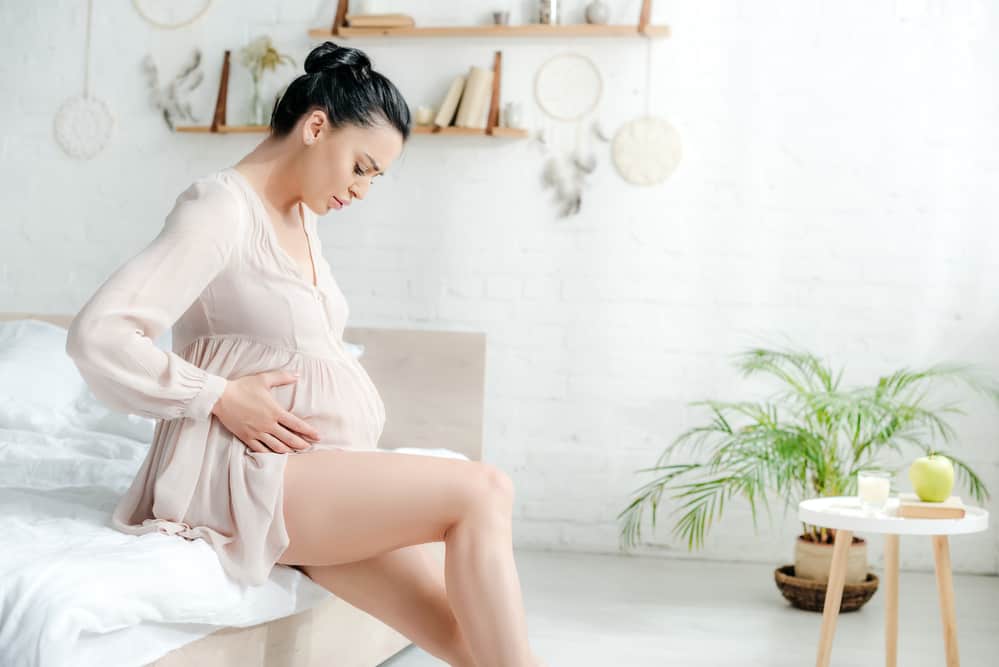
Is It OK to Use an Electric Massager While Pregnant?

Pregnancy aches are real, mama. Your shoulders carry a bump your body never trained for, your hips are shifting, and by the third trimester even rolling over in bed can feel like a workout. A daily spa visit would be lovely. A $60 massage gun on the nightstand feels a lot more realistic.
The good news? An electric massager is usually safe to use during a low-risk pregnancy, if you keep it on the right spots and the right setting. Here is where to use it, where to keep it off, and when to call your provider before plugging anything in.
If you've been eyeing the device on your nightstand thinking can I even use this right now?, you're asking the right question, mama. That second-trimester ache between your shoulder blades is real, and you deserve relief. Let's sort out what is and isn't fair game.
Is it safe to use an electric massager while pregnant?
Yes, in most low-risk pregnancies, an electric massager is considered safe in the second and third trimesters on the shoulders, neck, upper back, and arms. A 2020 review in Cureus found that prenatal massage lowered depression, anxiety, and lower-back pain in pregnant women, with no increase in adverse outcomes (NIH/NCBI).
Massage during pregnancy can do more than just feel good. The same review flagged several measurable perks:
- Less depression and anxiety
- Lower risk of preterm birth
- Higher dopamine and serotonin
- Reduced back and leg pain (NIH/NCBI)
An older randomized study even found that massage during labor cut labor length by an average of 3 hours (NIH/NCBI). So massage itself is mostly friend, not foe. The caution is about where you point the device and how hard you run it.
If you're still in the early weeks and trying to sort out what's normal, our guide to signs of early pregnancy covers the symptoms most mamas notice first.
Where is it safe to use an electric massager during pregnancy?
Stick to the top half of your body and stay away from anything close to the bump or the blood vessels in your legs. The American College of Obstetricians and Gynecologists notes that prenatal massage can ease pregnancy discomfort when done carefully, ideally by a therapist trained in pregnancy positioning (ACOG). The same principle applies at home with a device.
Safer zones
- Shoulders, upper back, and the base of the neck. These carry most of the "bump tax" and tend to be the sorest spots by the third trimester.
- Arms and forearms. Low-risk and surprisingly relieving if you type or scroll a lot.
- Feet, gently. A foot massager on low is fine, but we'd still avoid the pressure points between the big toe and second toe and on the inner ankle as a precaution.
Areas to skip entirely
- The belly. Vibration near the uterus is not worth the worry.
- The spine, lower back, hips, and glutes. These sit too close to the uterus and to the iliac vessels.
- The legs. This is the big one. We'll cover it next.
[UNIQUE INSIGHT] A lot of pregnancy massage advice focuses on the belly, but the legs are the spot that actually scares most OBs. That's the rule worth tattooing on your massage gun.
Why you should not use an electric massager on your legs
Pregnancy increases your risk of blood clots, and running a vibrating device up your calves can dislodge one. Pregnant and postpartum women are roughly 4 to 5 times more likely to develop venous thromboembolism (VTE) than non-pregnant women of the same age (NIH/NHLBI). The heightened risk starts in the first trimester and lasts through about six weeks postpartum.
A dislodged deep vein thrombosis (DVT) can travel to the lungs and become a pulmonary embolism, which is one of the leading causes of maternal death in high-income countries (CDC). That is the specific risk your provider is worried about when they say no massage guns on the legs.
Signs of a DVT to never ignore, mama:
- Swelling, pain, or tenderness in one calf or thigh
- Warmth or redness along a vein
- Sudden shortness of breath or chest pain (call 911)
If any of that shows up, stop the massager immediately and call your provider the same day. This is a "better to ask" situation, every time.
How should you use an electric massager safely during pregnancy?
Treat it like a gentle helper, not a deep-tissue therapist. Most manufacturers of percussive devices recommend a low-to-medium setting during pregnancy, and short sessions on any one spot. A handful of simple rules keeps you in the safe lane.
Low setting, short sessions
- Start on the lowest intensity your device offers. You can always nudge it up, you can't undo bruising.
- Keep massage-gun time to 1 to 2 minutes per area, then move on.
- With a massage chair or cushion, cap the session at 20 minutes. Yes, even if you fall asleep. (We've all been there, mama.)
Heat and pressure
Your core body temperature already sits a little higher in pregnancy, and overheating is linked to neural tube defects and other risks, which is why saunas and hot tubs over 101°F are off the table (Mayo Clinic). If your massager has a heat setting, keep it on low or off. Never layer it with a heating pad.
Pressure matters too. Never directly massage the spine. Keep the device above your shoulder blades, not below. And skip the classic "pressure point" spots on the wrists (SP6), ankles (LI4), and between the fingers that acupressure practitioners avoid during pregnancy as a precaution.
If you're also second-guessing shapewear or anything else that puts pressure on your bump, our guide on whether you can wear a waist trainer while pregnant walks through the same kind of caution.
When should you avoid electric massagers entirely?
Some conditions take home massage off the table, full stop. In each case below, talk to your provider before using any vibrating device, and honestly, the safer default is to skip it until postpartum.
First trimester
Most device manufacturers recommend against use in the first trimester. There isn't strong evidence of harm, but there also isn't much testing, and miscarriage rates are naturally highest in those early weeks. Many mamas find that vibration also worsens morning sickness, so the math usually isn't in your favor anyway.
High-risk pregnancy
If your provider has labeled your pregnancy high-risk (for age, twins, prior preterm birth, or any other reason), skip the massager until you get a clear green light. ACOG recommends individualized guidance for any complementary therapy during a high-risk pregnancy (ACOG).
Deep vein thrombosis (DVT)
If you have a known clot or a history of DVT, an electric massager on the legs is an absolute no. Even on other areas, clear it with your provider first.
Pre-eclampsia
Pre-eclampsia raises your blood pressure and puts stress on your vessels. The conservative advice is to avoid electric massage until you're postpartum and cleared.
Placenta previa, accreta, or abruption
Any placenta condition that raises bleeding risk is reason enough to pause electric massage, especially anything near the torso or back.
Gestational diabetes
Diabetes doesn't automatically rule out massage. But check your blood sugar before a session and talk to your provider about timing, since massage can nudge circulation and glucose response.
If you sometimes feel a strong pulse in your belly after a session, that's usually normal increased blood flow. Our guide to feeling a heartbeat in your stomach explains what that sensation actually is.
What types of electric massagers work best during pregnancy?
The right device is the one you can control easily with one hand, set to low, and point at your shoulders. Complicated is not your friend right now. A few categories earn their spot on the nightstand.
- Neck and shoulder massagers. Drape-over designs hit the exact spots your bump makes sore, and they stay nowhere near the belly or legs.
- Heated massage cushions or chair pads. A good cushion on a low setting is gentler than a massage gun, which makes it the friendliest pick for mid-back tension.
- Foot massagers. Electric foot basins and rollers feel amazing on puffy feet. Keep the heat modest and skip the leg-compression style during pregnancy.
- Percussive massage guns. Powerful and effective, but demand the most caution. Follow the manufacturer's pregnancy guidance and stay on the upper body only.
Features to look for
A pregnancy-friendly device should offer:
- Adjustable intensity, with a genuinely low setting (not "low" that's still brutal)
- Variable heat, including an off option
- Manufacturer guidance for pregnancy use, or at least no warning against it
- A light, ergonomic handle you can hold in a supported position (you'll be sitting, not standing)
What are the alternatives to electric massagers during pregnancy?
If an electric device just makes you nervous, listen to that, mama. The worry will undo the stress relief, and there are plenty of gentler ways to get the same benefits.
- Prenatal massage from a certified therapist. Pregnancy-trained bodyworkers use side-lying positioning and gentle pressure. The ACOG-endorsed benefits of pregnancy massage show up best in this setting.
- Foam rollers, very gently. Great for the upper back, with a partner spotting you so balance isn't a problem.
- Massage balls. Spiky or bumpy balls under the feet or against the upper back give targeted relief with zero vibration.
- Prenatal yoga or pilates. Posture work unloads the shoulders and lower back in a way no device can replicate. Many mamas find one weekly class moves the needle.
- Partner massage. A 2019 study found a 10-minute back massage from a partner, twice a week, improved pain, anxiety, and mood in pregnant women (NIH/NCBI). Free, low-tech, and surprisingly well-studied.
[PERSONAL EXPERIENCE] Our own contributors who've used massage guns through pregnancy all landed on the same trick: upper body only, lowest setting, 90 seconds max per spot, and always while sitting on the couch, not standing. Boring rules, but they work.
If you're building a broader picture of what's safe and what isn't during pregnancy, also take a look at our guide on whether you can jump rope while pregnant.
Final thoughts
Massage is one of the nicer things you can do for your body during pregnancy. Fatigue, sore shoulders, and a stressed-out nervous system all respond to it, and you don't have to book a spa appointment to get the benefits. An electric massager, used thoughtfully, slots right in.
Keep the device on your upper body. Stay off the belly, spine, lower back, hips, and legs. Run it on low, cap each area at a minute or two, and call your provider about anything that doesn't feel right. That's the whole playbook.
And if you're in the first trimester, high-risk, managing pre-eclampsia, or fighting off a clot history, this isn't the nine months to DIY. Your provider can point you to a prenatal massage therapist who'll do it safely, or recommend alternatives that take massage off your worry list entirely.
You're carrying a lot right now, mama. Let the soreness get some attention, in the safest way possible.
This article is for informational purposes only and is not a substitute for professional medical advice. Always consult your healthcare provider, obstetrician, or midwife for guidance specific to your pregnancy.