When to Switch From Diapers to Pull-Ups?

Your toddler is squirming through every diaper change, standing up before the tabs are even fastened, and you're Googling at 11 p.m.: is it time for pull-ups? Take a breath, mama. You are not behind.
Pull-ups are no longer a "potty training only" product. Modern versions are as absorbent as regular diapers, and diaper pants can fit from six months. The American Academy of Pediatrics places most potty training readiness between 18 and 24 months, though some kids aren't there until closer to 3 (AAP, HealthyChildren.org).
Here's when the switch makes sense, what the three products actually do differently, and how to decide without a blow-by-blow fight. Our sibling guide to how to potty train your baby picks up where this one leaves off.
When should you transition from diapers to pull-ups?
There's no specific age, mama. The good news is that modern pull-up absorbency rivals a standard diaper, so the switch is no longer tied to potty training alone (AAP, HealthyChildren.org).
The practical milestone is independent standing. Pull-ups are designed to slide up, not wriggle on over a lying bottom. Most babies stand steadily between 9 and 12 months, per CDC developmental milestones (CDC). If your baby stands and cruises, a pull-up goes on in seconds.
Your toddler finds diapers uncomfortable
Active toddlers often push back on a rigid waistband. An elastic waist is softer on a full belly and moves with them when they squat or climb.
If your child keeps tugging the diaper off, that's a cue. Try a pull-up for a day and see if the tugging stops.
Your toddler resists lying down for changes
You know the move: you reach for the tabs, she flips, rolls, and bolts. An elastic waist skips the wrestling match. She stands. You slide. Done.
For a refresher on technique, our guide to how to change a diaper covers the basics plus the "how to survive a squirmy phase" bits.
You've started potty training
When your child is ready for potty training, pull-ups can help the process click. They come off independently, feel different from diapers, and the big-kid design shift does a surprising amount of psychological work.
What is the difference between pull-ups and diapers?
Two main things set them apart, plus a third product that blurs the line.
Pull-ups have an elasticated waistband and go on like underwear. There are no sticky tabs. Most do not have a dry-feel layer, because feeling wet is the point during potty training: your toddler notices and, over time, connects the feeling with "I should head to the potty."
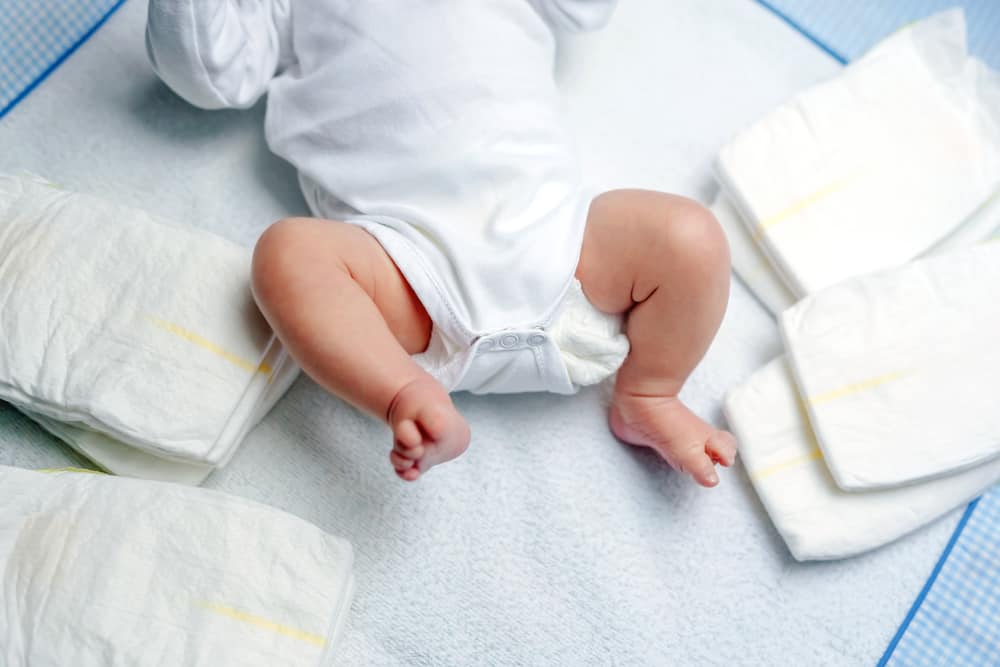
Diapers use adhesive tabs and a dry-feel top sheet that wicks moisture away from the skin. That keeps babies comfy between changes and protects against diaper rash, which Mayo Clinic notes is most common between 9 and 12 months of age (Mayo Clinic).
Diaper pants are the hybrid: elastic waistband like a pull-up, dry-feel core like a diaper. They fit babies from about six months, and they're handy for the "too wriggly for tabs, not ready for potty" stretch.
These design differences create real-world variation in comfort, leakage, and cost. Here's a side-by-side for when you're standing in the store aisle at 8 a.m.
| Feature | Pull-Ups | Diaper Pants | Diapers |
|---|---|---|---|
| Waistband | Elasticated, slides on like underwear | Elasticated, like a pull-up | Flat with adhesive tabs |
| Size range | Size 4 and up (some brands start at 3) | Size 3 to 8 | Preemie to size 7 |
| Typical age | 1 to 9+ years | 6 months to 3 years | Preemie to about 2 years |
| Leak protection | Brands claim parity with diapers; parents report more night leaks. Nighttime pull-ups help. | Strong; back rises higher than pull-ups | Excellent, especially styles with a back pocket for blowouts |
| Feel | Designed to feel wet (helps potty learning) | Dry-feel layer | Dry-feel layer |
| Price | More expensive per piece | Similar to diapers | Usually the cheapest |
| Designs | Fun patterns and characters | Similar to diapers | Fewer designs |
Are pull-ups easier to use than diapers?
Often, yes, as long as you know the one trick: rip the sides at the seam to take them off. Trying to slide a soiled pull-up down over wriggly legs is a recipe for a kitchen-floor moment you won't love.
Once you've got that, pull-ups shine for active kids. Your toddler may still need the changing mat for cleanup, but for a clean swap at a playground or a friend's house, she can stand up and you're done in twenty seconds.
The tradeoff: you have to fully remove trousers, tights, or leggings to put on a new one. If you're changing six times a day and your toddler is in winter tights, that's a lot of leg-wrestling. On those days, diapers with tabs are often the saner call.
How do you change a pull-up?
Here's the step-by-step, including the trick most first-time parents miss.
- Rip both sides along the seam. Don't pull the pull-up down over the legs if it's soiled.
- Fold it inward so the contents can't escape.
- Secure with the tape on the back of the pull-up.
- Stretch a clean one open with both hands, like underwear.
- Pop her feet through the leg holes.
- Slide the pull-up up and over her bottom.
- For boys, point downward before closing. That one's easy to forget, and it's the single biggest cause of pull-up leaks.
If you're dealing with a blowout, that's when a diaper with a back pocket earns its keep. Our overnight diaper guide covers the nighttime version of this question.
Should you use pull-ups for potty training?
The AAP lists pull-ups alongside underwear as a reasonable potty training option and emphasizes that readiness, not the product, drives success (AAP, HealthyChildren.org).
Pull-ups help potty training because they:
- Feel different from diapers, so your child doesn't forget what's happening
- Let her feel wet, which is an honest feedback signal
- Come off and on independently, so potty trips don't need you
- Come in big-kid designs, which some toddlers love
That said, they're not mandatory. One older but still-cited randomized trial found that skipping pull-ups and going straight to underwear shortened daytime training in some families (Butler, PMC). Underwear is also cheaper. If you've got a new couch or a pale carpet, though, pull-ups are the lower-stress bridge.
Either path is fine. The AAP's core advice is consistent: follow your child's cues, don't punish accidents, and if it feels like a battle, pause for a month and come back (AAP, HealthyChildren.org).
What about overnight?
Overnight is where pull-ups can disappoint, mama. The elastic waist lets more escape when a toddler is sprawled in weird angles on the mattress. Nighttime pull-ups add absorbency for the heaviest wetters.
If leaks persist, staying with overnight diapers until nighttime dryness arrives is a perfectly valid call. The CDC and AAP both note that nighttime dryness typically lags daytime by months or even years, and about 20% of 5-year-olds still wet the bed occasionally (AAP, HealthyChildren.org). That's normal.
FAQs
At what age should you switch from diapers to pull-ups?
Most families switch during potty training, which the AAP places between 18 and 24 months for many toddlers and closer to 3 for others (AAP, HealthyChildren.org). Diaper pants bridge the gap from 6 months. Readiness is what counts: stable standing, interest in the potty, and the hand skill to pull fabric up and down.
Are pull-ups as absorbent as diapers?
Lab-wise, most major-brand pull-ups hold similar volumes. In real life, parents report more leaks from the elastic waists, especially overnight. Nighttime pull-ups help. If you're still seeing leaks, traditional overnight diapers are the safer choice until daytime training is fully locked in.
Which is cheaper, pull-ups or diapers?
Pull-ups typically cost more per piece than diapers from the same brand. Once your toddler can manage them independently, though, you may use fewer per day, which narrows the gap. Underwear is cheapest of all, with the obvious laundry tradeoff.
Can I use pull-ups before potty training?
Yes. Once your child can stand steadily, around 9 to 12 months per CDC milestones, pull-ups and diaper pants are perfectly fine as everyday wear (CDC). You don't have to wait for potty training. You just have to wait for the standing part.
What if my toddler refuses pull-ups?
Some kids flat-out reject them and want to stay in diapers. That's okay. The AAP is clear that forcing any step in toilet training tends to stretch the whole process out. Pause, try again in a few weeks, and let her drive.
This article is for informational purposes only and is not a substitute for professional medical advice. Always consult your pediatrician for guidance specific to your child's development and diapering needs.